The Technical Foundations of Random Number Generator Implementation Across Integrated Mobile Betting Platforms
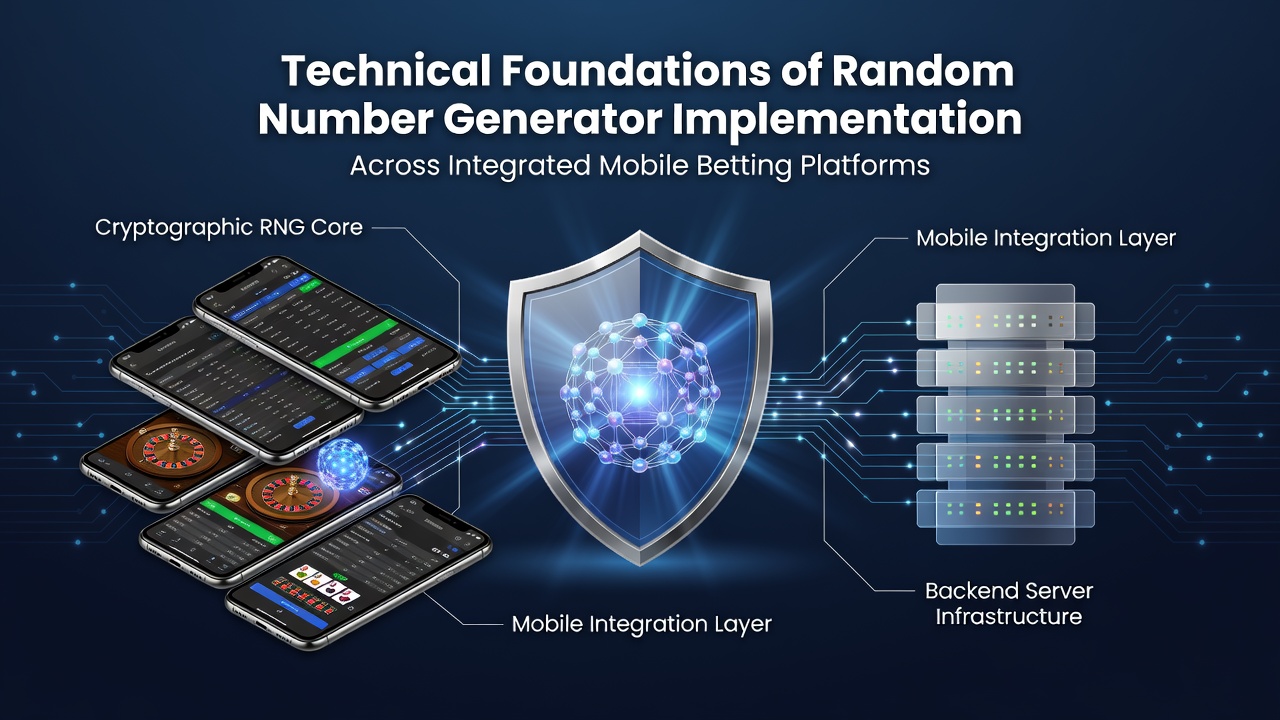
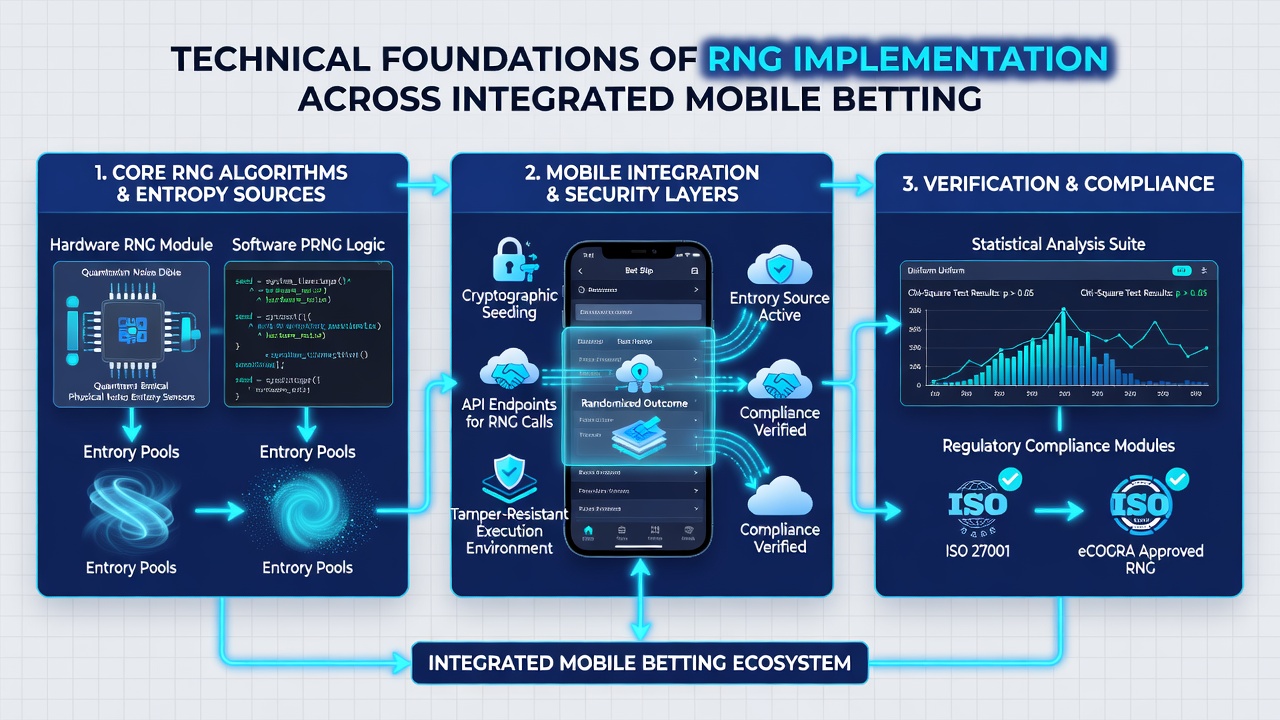
Random number generators form the core mechanism that determines outcomes in mobile betting platforms, where developers integrate both hardware-based true random number generators and algorithmic pseudo-random number generators to produce sequences that pass statistical tests for unpredictability. These systems rely on entropy collection from device sensors, thermal noise, and network timing data to seed generators, and they undergo continuous evaluation against suites such as the NIST SP 800-22 test battery to confirm that output distributions remain uniform across millions of simulated draws. In integrated environments the RNG module communicates with the betting engine through secure APIs that enforce separation between the random sequence production layer and the user interface, which reduces the risk of tampering while mobile devices switch between cellular and Wi-Fi connections.
Entropy Sources and Seeding Mechanisms
Hardware entropy sources supply the initial randomness that feeds into mobile RNG implementations, and developers combine readings from accelerometers, gyroscopes, and microphone input with operating system level calls to the kernel random number pool. Seeding occurs at application launch and at regular intervals thereafter, while reseeding counters drift that can occur when battery state or temperature affects sensor output quality. Researchers have documented that platforms using multiple independent entropy collectors maintain higher resilience against prediction attacks, and testing protocols require that each collector contributes measurable min-entropy before the combined seed enters the deterministic generator stage.
Algorithm Selection and Compliance Standards
Common algorithms include AES-CTR-DRBG and HMAC-DRBG constructions recommended in NIST SP 800-90A, because these constructions allow efficient generation on ARM-based mobile processors without excessive battery drain. Implementations also incorporate post-processing steps such as von Neumann debiasing and hash-based extraction to remove any residual bias from raw entropy samples. Regulatory frameworks in multiple jurisdictions mandate third-party certification of these algorithms, and certification bodies examine both teh source code and the compiled binaries that run on Android and iOS devices to verify that no debugging interfaces remain active in production builds.
Integration Across Distributed Betting Infrastructure
Mobile betting platforms connect RNG services to central game servers through encrypted channels that carry only hashed commitments rather than raw random values, and this architecture allows the server to verify fairness after each round without exposing the full sequence in advance. Load balancers distribute requests across regional RNG clusters so that latency stays below thresholds required for real-time betting, while failover mechanisms switch to backup generators if primary entropy sources report insufficient health checks. Observers note that synchronization between mobile clients and backend services relies on synchronized clocks and nonce values to prevent replay of previously used random sequences.
Security Testing and Continuous Monitoring
Automated test harnesses execute millions of RNG output samples daily, applying the Dieharder suite alongside custom statistical checks that detect patterns specific to mobile hardware variations. Any deviation beyond established thresholds triggers immediate alerts to operations teams, and the affected RNG instance is isolated until engineers complete forensic review. Data from these monitoring systems shows that properly maintained implementations maintain pass rates above 99.9 percent across extended test periods, and platform operators publish aggregated test summaries to demonstrate ongoing compliance with technical standards set by organizations such as the National Institute of Standards and Technology.
Performance Considerations in Mobile Environments
Power consumption and thermal limits influence RNG design choices on handheld devices, leading developers to favor lightweight deterministic generators that run primarily on the CPU while offloading heavy entropy harvesting to background threads. Caching of pre-generated random values allows rapid delivery during high-frequency betting sessions, yet cache sizes remain limited to avoid memory exhaustion on lower-end handsets. Network conditions further affect performance because reseeding events sometimes require server-supplied entropy supplements when local sensors report degraded quality due to environmental interference.
Future Directions in RNG Deployment
Quantum-resistant constructions and post-quantum cryptography considerations are entering discussions around long-term RNG security, although current mobile betting platforms continue to rely on established NIST-approved methods. Integration of on-device secure enclaves provides an additional isolation layer that protects seed material from application-layer compromise, and several manufacturers have begun exposing dedicated random number instructions through their mobile SDKs. These hardware features reduce reliance on software entropy pools and shorten the time required to produce fresh seeds during rapid successive game rounds.
Conclusion
Technical foundations of RNG implementation in mobile betting platforms rest on layered entropy collection, standardized algorithmic generators, rigorous statistical validation, and secure system integration that together produce verifiable random outcomes at scale. Continuous monitoring, hardware acceleration, and adherence to published standards from bodies such as the National Institute of Standards and Technology and research groups affiliated with the International Organization for Standardization maintain the reliability of these systems as device capabilities and network environments evolve.