
Bally’s Corporation Secures Clark County Approval for Phased Development Around Athletics Ballpark Site
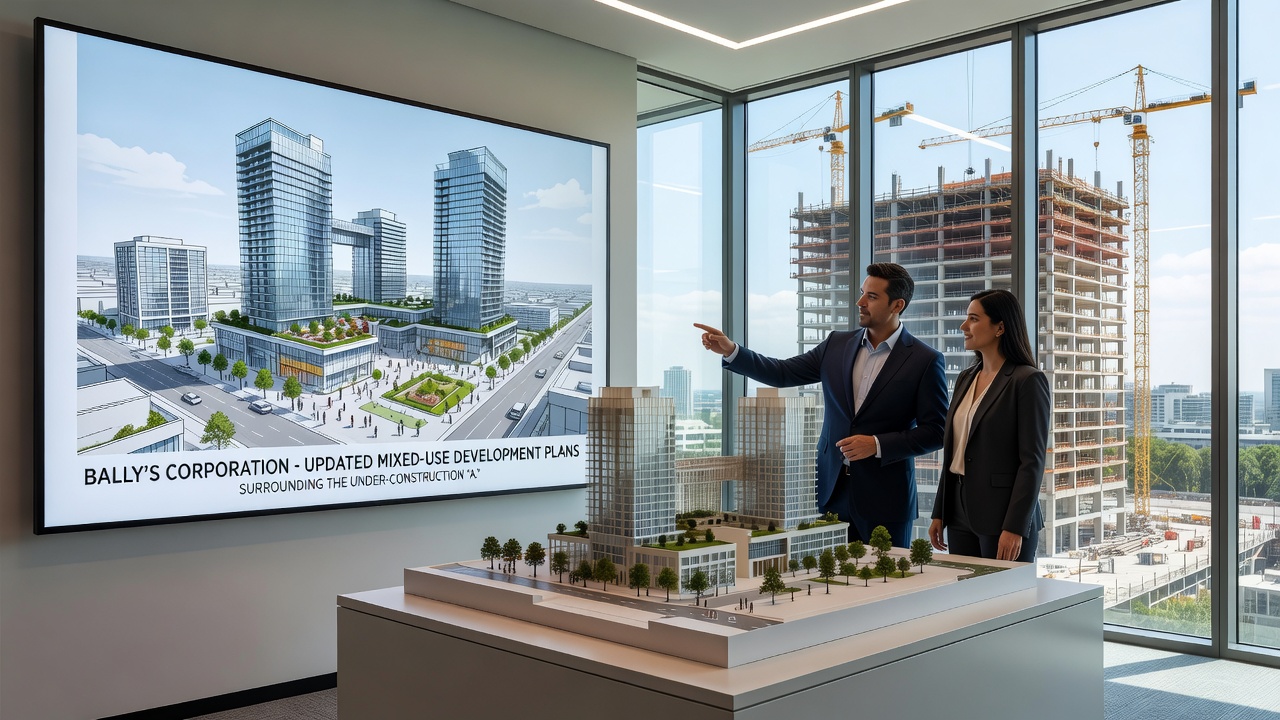
Bally’s Corporation has revised its approach to the mixed-use development that surrounds the under-construction Athletics MLB ballpark on the former Tropicana Las Vegas property, and Clark County has granted approval for several initial components including a public plaza, additional parking facilities, and a theater venue as part of a staged rollout while teh company continues to pursue permits and financing for the full hotel-casino elements.
The overall project carries an estimated price tag of approximately $1.19 billion with a potential completion target set for 2030, according to filings and statements tied to the county review process. Observers note that the phased strategy allows Bally’s to move forward on visible public and entertainment features even as larger-scale gaming and lodging plans remain under evaluation.
Project Background and Site Context
The Athletics franchise selected the Tropicana site for its new ballpark after years of discussions about a Las Vegas relocation, and Bally’s secured the surrounding land to create an integrated entertainment district that would complement game-day traffic and year-round visitation. County records show the original concept included a larger casino resort component from the outset, yet market conditions and regulatory timelines prompted the current adjustments to the sequence of construction.
Those adjustments center on delivering the plaza, parking structures, and theater first, elements that received formal Clark County approval in recent proceedings. The theater component is described in project documents as a flexible venue capable of hosting concerts, shows, and events that can operate independently of the eventual casino operations.
Approved Elements and Phased Timeline
Under the newly approved phase, construction of the plaza is expected to begin once final engineering reviews conclude, while parking facilities will address both ballpark attendees and visitors to the theater and future commercial spaces. County planning staff confirmed that these components align with existing zoning and traffic management requirements for the area, allowing work to proceed without waiting for the remaining hotel-casino approvals.
Full hotel-casino development still requires additional Clark County entitlements plus financing commitments that Bally’s has indicated will be pursued in parallel with the initial construction. Project timelines list 2030 as the outer boundary for complete build-out, although interim milestones for the approved phase could arrive earlier depending on contractor schedules and supply chain factors.
Financing and Regulatory Path Forward
Financing details for the complete $1.19 billion project remain subject to further announcements, with Bally’s noting that capital partners and debt structures are still being finalized. The company has previously used a combination of corporate resources and joint-venture arrangements on similar Las Vegas projects, and industry reports suggest a similar model may apply here once the county clears the remaining land-use conditions.
Clark County officials have emphasized that each subsequent phase will undergo separate review, a standard practice that ensures infrastructure capacity keeps pace with new development intensity. This incremental approach also gives Bally’s flexibility to adjust square footage or programming based on evolving market data from the ballpark’s opening seasons.
Integration With Ballpark Operations
The Athletics ballpark itself is advancing on its own construction schedule, and Bally’s development is designed to provide pedestrian connections, shared parking, and entertainment options that activate the surrounding blocks on non-game days. Project documents highlight how the approved plaza will serve as a gathering space that can host pre-game events or independent programming, while the theater adds a nighttime draw that extends foot traffic beyond baseball season.
County transportation studies tied to the approvals project modest increases in local vehicle trips once the initial phase opens, with mitigation measures already incorporated into the parking and access plans. These studies also account for the larger ballpark footprint and its expected attendance patterns.
Conclusion
Bally’s updated development strategy reflects a measured response to both regulatory and market realities surrounding the Athletics ballpark site, securing Clark County approval for the plaza, parking, and theater while the hotel-casino elements continue through their own approval and funding process. The $1.19 billion project retains its 2030 horizon, and further announcements on financing and remaining entitlements are expected as construction on the approved phase advances.